

Christine Cordial
Indiana State Bar Association
Indianapolis, Indiana
Christine Cordial serves as the Director of Justice Initiatives at the Indiana State Bar Association (ISBA). In that role, she oversees the Rural Practice Academy, a yearlong cohort program designed to equip attorneys with the tools, connections, and confidence to launch sustainable law practices in rural and underserved communities. Her work focuses on expanding access to legal services while strengthening the pipeline of attorneys serving communities with unmet legal needs.
How are you meeting the needs of the middle market in your role at the ISBA? One of the foremost goals of the Rural Practice Academy is to help prepare attorneys to build client-centered practices that are financially sustainable while remaining accessible to middle-income clients. We want to encourage attorneys to think strategically about who they serve and how they deliver legal services. Programming focuses on innovative business models, pricing strategies, and technology that can make it easier to serve middle-income individuals and small businesses who may not be able to afford traditional legal representation.
At the statewide level, the Indiana Supreme Court is actively developing a pilot program allowing for Allied Legal Professionals (ALPs) in limited-scope capacities to address the access gap. Though ISBA is a voluntary bar association and not an agency of the Court, we’re grateful for a strong partnership that allows us to be a part of the conversations and convenings that are helping to shape this ALP program. We aim to play a key role in educating the legal community about ALPs and as a training provider for future legal support professionals who can serve the middle market.
What do you most value about ATLN? I really appreciate having a community of like-minded professionals who are committed to rethinking how legal services are delivered. It’s a heavy mission that’s not possible without a network of folks who encourage, support, and exchange ideas that can help each member address the access gap in a way that works for their community. Having the opportunity to collaborate with attorneys, judges, bar associations, and other legal professionals from around the country—and to see the range of work that they’re doing in their states—is extremely valuable and inspiring.
What have you found to be the most valuable resource as you build your programs at the ISBA? In building the Rural Practice Academy, we invested significant time in engaging our members and the broader legal community as partners in the process. We wanted them to have a seat at the table from the very beginning and truly be co-creators of the program. Without their buy-in and collaboration, we risked creating something that looked good on paper but didn't work in practice. Their ideas, experiences, and honest feedback have been the most valuable resource in evolving the academy from concept to reality.
What change to the justice system do you think would have the biggest positive impact on serving the middle market? It sounds simple, but we need more legal professionals in the most underserved communities. More than half of Indiana’s counties meet the ABA’s definition of a legal desert (having less than one attorney per 1,000 residents), and that justice gap is amplified when we consider how many of those residents can actually afford and access legal help. We developed our Attorney Shortage Plan to try to tackle several layered factors that contribute to the shortage of attorneys that Indiana, like many other states, faces today. Our work focuses on three complementary strategies: helping attorneys build sustainable practices in rural and underserved communities, strengthening pathways that prepare new lawyers for practice, and supporting the thoughtful implementation of alternative models, like ALPs, to expand access to limited legal services.
Share one fun fact about yourself. I’m a little obsessed with my favorite band, the Avett Brothers, and have seen them 26 times across the country. It’s a great way to visit new places, check off venues that I haven’t been to before (three nights at Red Rocks was a personal favorite), and experience the powerful, immersive energy and feeling of connection that only live music can create.
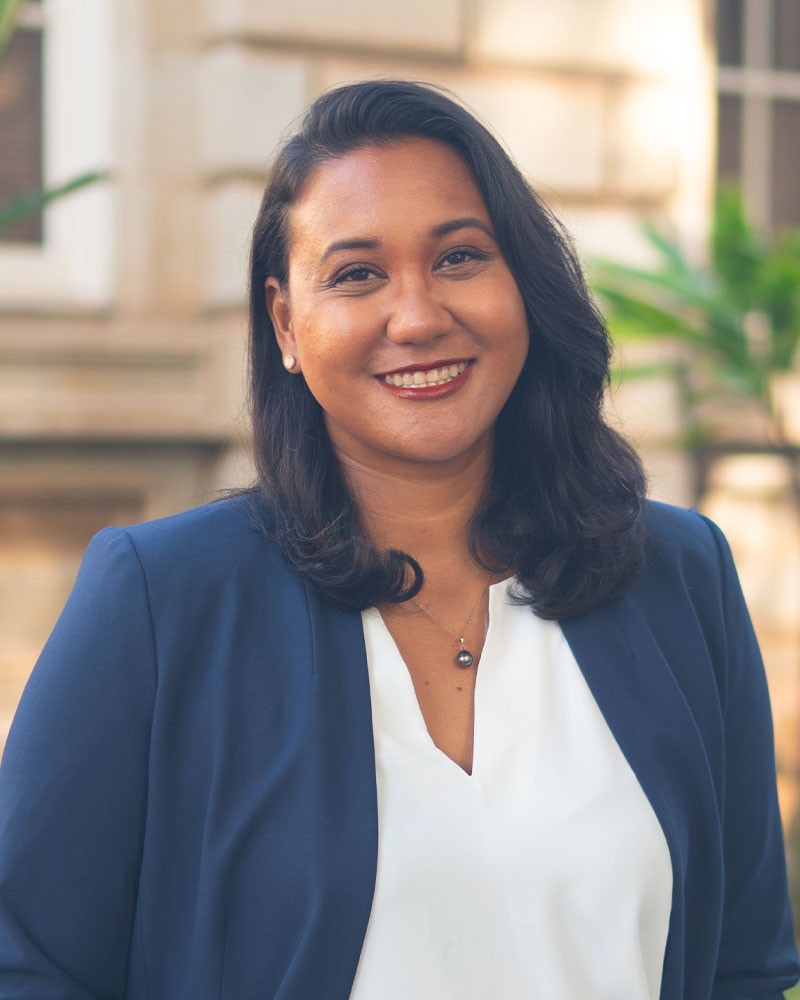
Daylin-Rose H. Heather
Hawai'i State Judiciary
Honolulu, Hawai'i
Daylin-Rose H. Heather is the Deputy Administrative Director of the Courts at the Hawai'i State Judiciary. Daylin has been with the Judiciary in various roles as a staff attorney at the Hawai'i Supreme Court, Special Assistant to the Administrative Director of the Courts, and judicial law clerk to Chief Justice Mark E. Recktenwald, as well as Intermediate Court of Appeals Judges Daniel R. Foley (Ret.) and Alexa D.M. Fujise (Ret.).
Previously, Daylin was a staff attorney at the Native Hawaiian Legal Corporation, a non-profit law firm, representing clients through direct representation and impact litigation. She is currently a member of the Hawai'i State Bar Association's Judicial Administration Committee, Hawai'i State Bar Association's Committee on the Delivery of Legal Services to the Public, and the Hawai'i Supreme Court’s Permanent Committee on Equality and Access to the Courts. Daylin graduated with honors from the William S. Richardson School of Law at the University of Hawai'i.
How are you meeting the needs of the middle market? Overall, state courts are charged with building a more efficient and responsive justice system, which recognizes and addresses the emerging needs of the communities served. This is achieved through the daily operations of the court, but also through targeted programs. In Hawaiʻi, this includes an ongoing pilot eviction mediation program for summary possession cases, free expungement and bench warrant recall clinics held in various community-based locations on Oʻahu, and self-help centers and access to justice rooms in courthouses throughout the state, which provide free legal assistance regardless of one's level of income, just to name a few.
What do you most value about ATLN? I value the opportunity to exchange ideas with innovative attorneys, judges, and other legal professionals from across the country who are dedicated to increasing access to legal services in wide-ranging but complementary ways.
What have you found to be the most valuable resource as programs are built? Like many other jurisdictions, we are proud of the partnerships that we have built with legal service providers, the bar, community organizations, and government partners to expand the reach of initiatives that address varying legal and other needs in Hawaiʻi.
What change to the justice system do you think would have the biggest positive impact on serving the middle market? Top of mind, strengthening the pipeline of professionals equipped to address the diverse legal needs of individuals, families, organizations, and communities, while continuing to explore innovative models to expand access to legal services and ways to make existing processes more accessible to all.
Share one fun fact about yourself. I play flag football on a team of alumni women from the University of Hawaiʻi - William S. Richardson School of Law, which includes (or has included) state justices and judges, legislators, government and private attorneys, nonprofit directors, law professors, and more. Each year, we face off against current law students in a spirited game of football that fosters competition, camaraderie, and support for the next generation of legal professionals. To top it all off, the alumni won last year and hold the bragging rights until we play again.
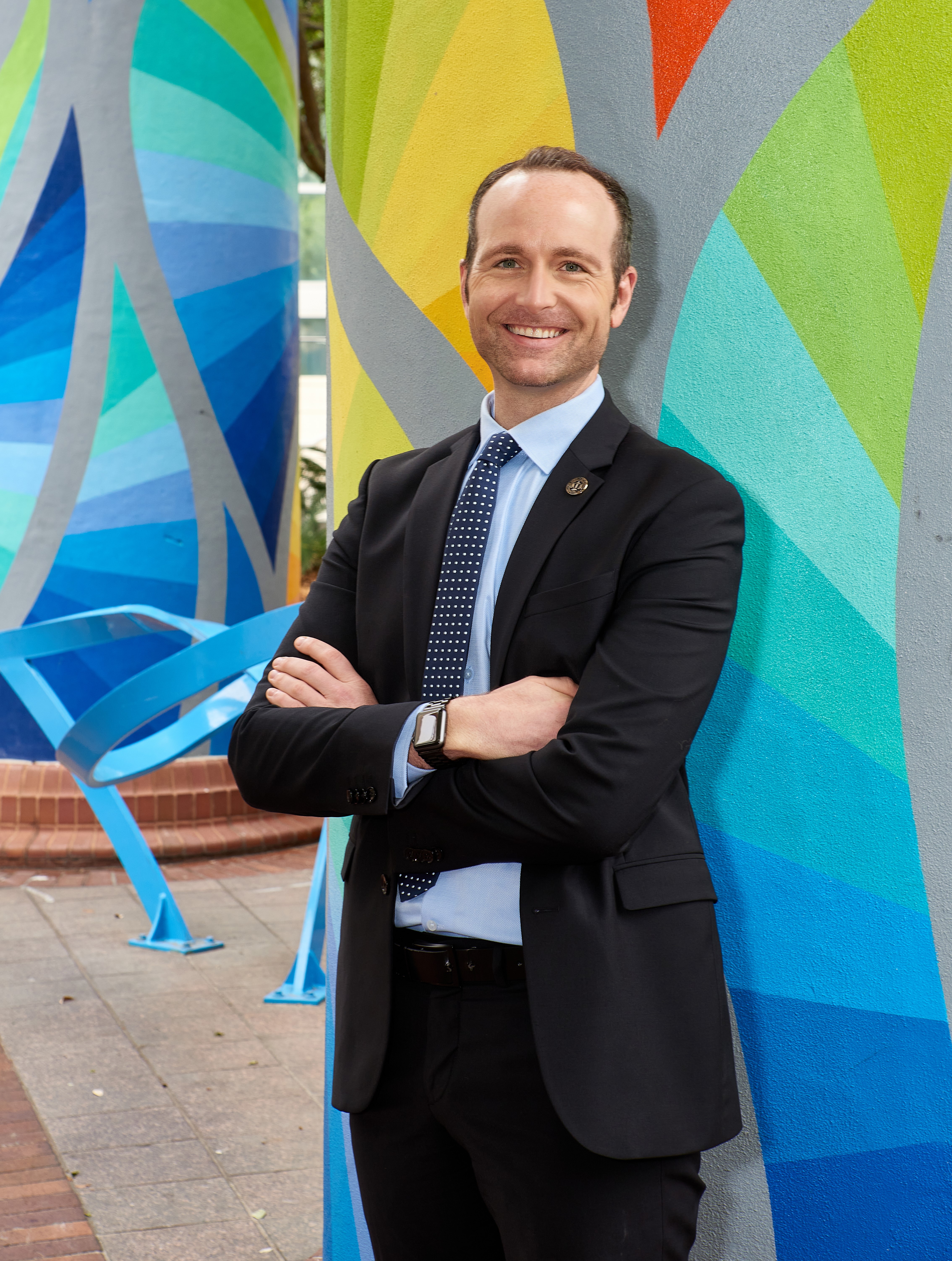
Aaron J. Irving
Jacksonville Area Legal Aid, Inc.
Jacksonville, Florida
Aaron joined Jacksonville Area Legal Aid, Inc. (JALA) as the Director of Pro Bono and Family Law Low Bono (FLARE) in September 2022. Previously, he owned and operated his own Jacksonville law firm focused on family law, probate and estate planning, and personal injury, while also serving as a pro bono volunteer attorney for JALA. He is an adjunct professor of law at Florida State College at Jacksonville, a volunteer judge on the Teen Court Bench, and has been a member of the Florida Bar since 2010. Connect with Aaron.
How are you meeting the needs of the middle market? Launched in 2018, JALA’s Family Law at a Reduced Expense (FLARE) program provides moderate-income families with reduced-fee legal assistance in family law matters. Designed as a “low-bono” service model, FLARE helps bridge the justice gap for those who earn too much to qualify for traditional legal aid but cannot afford private counsel.
The program emerged in response to the significant statewide shortage of family law representation. In 2016 alone, Duval County saw 9,122 family law filings, with the vast majority involving at least one unrepresented party. Statewide, civil legal aid programs offer almost no general family law representation outside of VOCA-funded cases, underscoring the need for an alternative approach.
To address this gap, the Florida Commission on Access to Civil Justice launched a pilot project focused on innovative case-triage strategies, drawing inspiration from ideas developed by Ed Marks of New Mexico Legal Aid. After that pilot ended, JALA created its own model, ultimately leading to the development of FLARE.
FLARE operates as a low-bono referral program to the private bar and is the first—and currently the only—legal aid low-bono program in Florida. Eligible cases include divorce (with or without children), paternity matters, and post-judgment modifications.
Clients apply online and are screened to ensure they fall within 0–400% of the federal poverty guidelines. Once approved, they may choose from several reduced-fee service options, including consultations, document preparation, or full representation. Deposits and retainers are held in trust by JALA, and participating attorneys submit invoices through the program for payment. Full-representation clients pay an initial retainer plus monthly trust deposits based on FLARE’s sliding scale.
Since 2018, the program has served nearly 1,000 individuals and currently partners with about 25 private attorneys. Approximately 30% of clients choose low-bono consultations, another 30% request document preparation, and about 40% receive full representation—demonstrating both the program’s impact and its ongoing importance.
What do you most value about ATLN? What I really value about Above the Line Network is that it goes beyond networking—it’s about learning, sharing ideas, and finding ways to strengthen and grow our existing low-bono programs.
What have you found to be the most valuable resource as you build your firm/program? The most valuable resource growing the FLARE program has been the support and active participation of the private bar and judiciary.
What change to the justice system do you think would have the biggest positive impact on serving the middle market? Improving access to affordable and efficient civil legal services can include financial support for legal aid low-bono programs, funding for additional court staff to assist with family law services such as alternative dispute resolution, enhancements to self-help family law forms, and increased state-wide support for legal aid, pro bono, and low-bono advocates.
Share one fun fact about yourself. I enjoy visiting places of worship for their architecture and their stained-glass windows. Beyond their beauty, these windows tell stories. I even have a quarter-sleeve tattoo of a stained-glass window that tells the story of my life and the things I hold most dear.
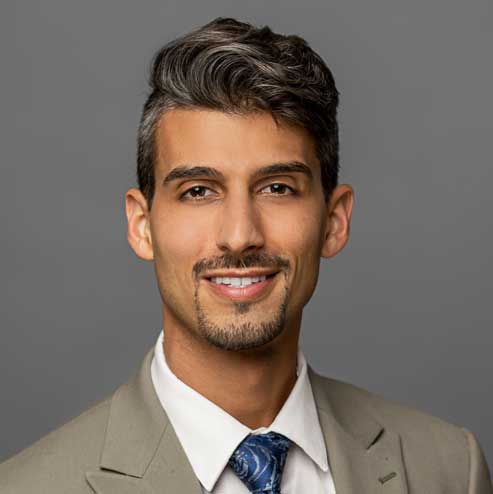
Daniel R. Hernandez
NextLevel Law, LLC
Chicago, Illinois
Daniel R. Hernandez is the founder of NextLevel Law and serves as its CEO and Principal Attorney. The Chicago-based firm provides affordable, transparent legal services to middle-income families, with a focus on family law and LGBTQ+ advocacy. He serves as the National Secretary for the Hispanic National Bar Association and its charitable arm, the HNBA VIA Fund. Daniel is a passionate innovator in access-to-justice reform and a proud member of the Above the Line Network, working to make legal services more inclusive and client-centered. Connect with Daniel.
How are you meeting the needs of the middle market? At NextLevel Law, we’ve built our entire model around serving the middle market—those who are often “above the line” for legal aid but still struggle to afford traditional legal services. We offer transparent, fixed-fee subscription pricing, which removes the fear of unpredictable legal bills and makes high-quality representation accessible. Our focus on family law and LGBTQ+ issues allows us to serve communities that are often overlooked or underserved. By combining affordability, empathy, and legal excellence, we’re closing the justice gap for middle-income individuals and families in Chicago and beyond.
What do you most value about ATLN? What I value most about ATLN is its collaborative spirit and bold mission. It’s a space where innovators, socially conscious firms, and justice advocates come together to share ideas, resources, and best practices. ATLN doesn’t just talk about the justice gap—it actively works to transform the delivery of legal services for the middle class. Being part of a network that amplifies the voices of middle-income Americans and pushes for systemic change is both inspiring and essential.
What have you found to be the most valuable resource as you build your firm/program? The most valuable resource has been community—both professional and client-based. Listening to the real needs of our clients helped shape our pricing model and service delivery. On the professional side, mentorship, collaboration with other forward-thinking attorneys, and involvement in networks like ATLN, and the Chicago Bar Foundation's Justice Entrepreneurs Project have provided insights and support that helped NextLevel Law grow with purpose. Also, being part of Chicago’s vibrant legal and social justice community has been a constant source of inspiration.
What change to the justice system do you think would have the biggest positive impact on serving the middle market? The biggest impact would come from reforming the regulatory framework to allow for more flexible legal service delivery models—including educating the judiciary on alternative fee structures and expanding the use of technology within the courts and legal service delivery. The current system is built around traditional, high-cost models that exclude middle-income Americans. If we can reimagine licensing, service delivery, and funding, we can make justice truly accessible for all.
Share one fun fact about yourself. I’m a huge fan of rollerblading along Chicago’s lakefront path—it’s my favorite way to unwind and recharge. There’s something about the rhythm, the skyline, and the lake breeze that clears the mind and fuels creativity.